Guide · 9 min read
What is a fairy tale?
A fairy tale is a short story of magic and wonder, in which ordinary heroes meet witches, fairies, giants or talking animals and good usually wins. Many began as folktales told aloud and were written down by Charles Perrault and the Brothers Grimm; others, like Hans Christian Andersen’s, were invented by their authors.
 By Pyxino ·
On this page
What makes a story a fairy tale?
A story is a fairy tale when it has magic, a faraway “once upon a time” setting, clear good and evil, patterns of three, and a hero who is changed or rewarded. These are common traits, not rules: as the Australian Fairy Tale Society’s page puts it, “Once upon a time, the people tried to define fairy tale. They are still trying.”
- Magic is real.Spells, wishes, talking animals and enchanted objects are part of everyday life, and nobody in the story is surprised by them.
- It happens once upon a time.The kingdom is far away and the time is long ago, so the story feels timeless.
- Good and evil are clear.A kind youngest child, a wicked stepmother, a hungry wolf: you know at once whom to cheer for.
- Things come in threes.Three wishes, three tasks, three bears, three little pigs. The third try is the one that counts.
- Someone is changed or rewarded.A frog becomes a prince, a kitchen girl goes to the ball, and the story ends “happily ever after”.
A fairy tale doesn’t need a fairy. The folklorist Stith Thompson noted that magic and talking animals are more common in these stories than fairies themselves.
A fairy tale in one minute: Goldilocks and the Three Bears
Goldilocks and the Three Bears is a classic example of a fairy tale: bears that live like people, everything in threes, and a lesson shown rather than stated.
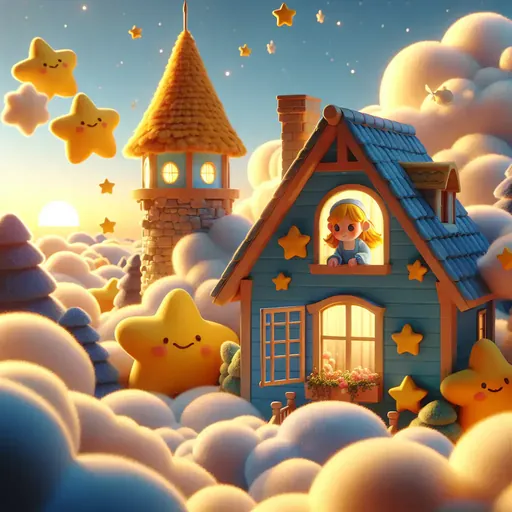
While three bears are out for a walk, a girl called Goldilocks wanders into their house. She tastes their porridge, tries their chairs and lies in their beds, and each time the smallest one is “just right”. When the bears come home and find her asleep in Baby Bear’s bed, she wakes up, jumps out of the window and runs all the way home.
Moral Respect other people’s homes and belongings.
What are the most famous fairy tales?
The most famous fairy tales include Cinderella, Snow White, Sleeping Beauty, Little Red Riding Hood, Hansel and Gretel and Beauty and the Beast. Most of these versions were printed in Europe between 1697 and 1890, but such tales are told all over the world.
| Fairy tale | Written down by | Year |
|---|---|---|
| The Tale of the Bamboo Cutter | Unknown author, Japan | Late 9th or early 10th century |
| Cinderella | Charles Perrault, then the Brothers Grimm | 1697, 1812 |
| Little Red Riding Hood | Charles Perrault, then the Brothers Grimm | 1697, 1812 |
| Sleeping Beauty | Charles Perrault | 1697 |
| Aladdin | Antoine Galland, from Hanna Diyab, a storyteller of Aleppo | 1710 |
| Beauty and the Beast | Gabrielle-Suzanne de Villeneuve, then Jeanne-Marie Leprince de Beaumont | 1740, 1756 |
| Jack and the Beanstalk | Benjamin Tabart, then Joseph Jacobs | 1807, 1890 |
| Snow White | The Brothers Grimm | 1812 |
| Hansel and Gretel | The Brothers Grimm | 1812 |
| The Elves and the Shoemaker | The Brothers Grimm | 1812 |
| Rumpelstiltskin | The Brothers Grimm | 1812 |
| The Little Mermaid | Hans Christian Andersen | 1837 |
| Goldilocks and the Three Bears | Robert Southey | 1837 |
| The Ugly Duckling | Hans Christian Andersen | 1843 |
| Vasilisa the Beautiful | Alexander Afanasyev, Russia | 1855–1867 |
| The Happy Prince | Oscar Wilde | 1888 |
| The Selfish Giant | Oscar Wilde | 1888 |
| The Three Little Pigs | Joseph Jacobs, from an English folktale | 1890 |
Where do fairy tales come from?
Fairy tales come from stories told aloud, some for thousands of years, that writers later collected and polished. In a 2016 study, Jamie Tehrani of Durham University and Sara Graça da Silva of the New University of Lisbon compared 275 magic tales and traced The Smith and the Devil back about 6,000 years, and Beauty and the Beast back 3,000 to 4,000. “These stories are far older than the first literary evidence for them,” Tehrani told Science News, though the folklorist John Lindow doubts the oldest date.
In print, Giovanni Francesco Straparola (1550s) and Giambattista Basile (1630s) were among the first, before Charles Perrault in 1697 and the Brothers Grimm in 1812. The name dates from 1697 too, when Madame d’Aulnoy used “conte de fées”, or fairy tale, for her collection. Some folklorists prefer the German Märchen or “wonder tale”.
Fairy tales were not always for children. Adults heard them just as often at first, and the Brothers Grimm rewrote theirs after complaints that they were not suitable for the young.
| Kind | Who made it | Examples |
|---|---|---|
| Folk fairy tale | Many tellers over centuries, until a collector wrote it down | Cinderella; Hansel and Gretel |
| Literary fairy tale | One author, who invented it (in German, a Kunstmärchen) | The Little Mermaid; The Happy Prince |
How many versions of Cinderella are there?
Cinderella has thousands of versions around the world: Marian Roalfe Cox had already gathered 345 of them in her study of 1893. The story stays close, but what identifies the heroine changes from place to place.
| Version | Who told it, and when | How she is found |
|---|---|---|
| Rhodopis | Strabo, a Greek geographer, between 7 BC and 23 AD | An eagle drops her sandal in the lap of the king of Egypt |
| Ye Xian | Duan Chengshi, China, about 860 | A very light golden shoe |
| La gatta Cenerentola | Giambattista Basile, Naples, 1634 | A clog that jumps from the king’s hand to her foot |
| Cendrillon | Charles Perrault, France, 1697 | A glass slipper, with the pumpkin and the fairy godmother |
| Aschenputtel | The Brothers Grimm, Germany, 1812 | A golden slipper |
Comparing them makes a classic lesson: the US Common Core’s Grade 2 standard on comparing versions of a story names “Cinderella stories” as its example.
Are The Three Little Pigs, The Wizard of Oz and Goldilocks fairy tales?
Yes: The Three Little Pigs, The Wizard of Oz and Goldilocks are all usually called fairy tales, each for a different reason.
- Is The Three Little Pigs a fairy tale? Yes, in the usual sense. It is an English folktale with no magic, but its talking animals, its pattern of three and its happy ending are fairy-tale traits, and Joseph Jacobs printed it in his English Fairy Tales in 1890.
- Is The Wizard of Oz a fairy tale? Yes, a modern one. L. Frank Baum published it in 1900 and called it a “modernized fairy tale”, with witches, magic and an invented land.
- Is Goldilocks a fairy tale? Yes. Robert Southey published The Story of the Three Bears in 1837, and it has been retold as a fairy tale ever since.
What is a fractured fairy tale?
A fractured fairy tale is a familiar fairy tale retold with a twist: a new point of view, a new setting or a surprising ending. The idea reached television in the “Fractured Fairy Tales” segments of The Rocky and Bullwinkle Show (1959–1961), Jon Scieszka’s The True Story of the 3 Little Pigs! (1989) lets the wolf tell it, and Shrek (2001) made the form hugely popular. Children love them because they already know the original and can spot what has changed.
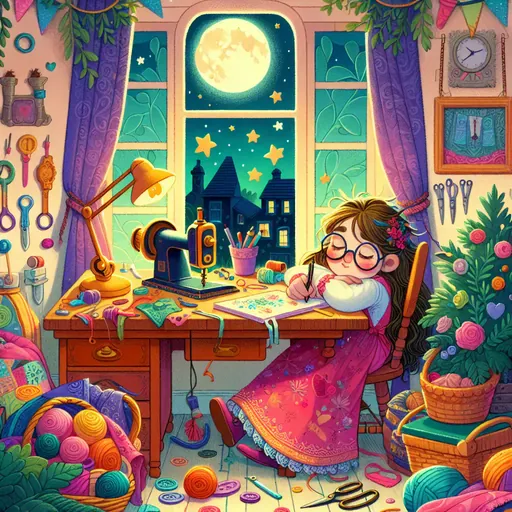
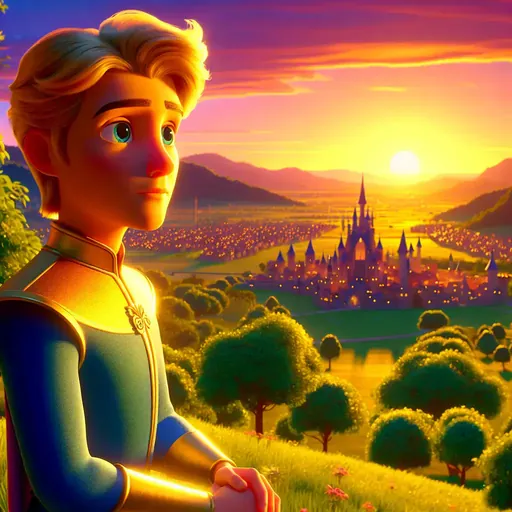
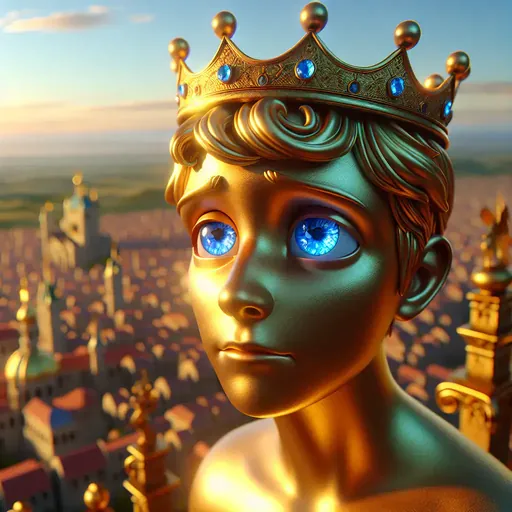
Compare the old tales with our illustrated retellings:
Why are fairy tales good for children, and at what age?
Fairy tales are good for children from about age three, because they show fear being faced and beaten in a safe, faraway world. G. K. Chesterton wrote in his essay The Red Angel: “Fairy tales do not give the child his first idea of bogey. What fairy tales give the child is his first clear idea of the possible defeat of bogey.”
| Age | Try | Why |
|---|---|---|
| 3 to 4 | The Three Little Pigs; Goldilocks | Repetition, gentle danger and a safe ending |
| 5 to 7 | Cinderella; The Elves and the Shoemaker; Hansel and Gretel | Longer plots. Read Hansel and Gretel first: it has scarier moments. |
| 8 to 12 | The Little Mermaid; The Happy Prince; fractured fairy tales | Sad endings and twists to talk about, and versions to compare |
In school, England’s national curriculum asks Year 1 and Year 2 children to get to know “fairy stories and traditional tales”, and Years 3 and 4 to read “fairy stories, myths and legends”.
How do you write a fairy tale?
To write a fairy tale, start “once upon a time” with a hero who has a wish, add magic and three tries, and let kindness or cleverness win.
- Start with “Once upon a time”. Introduce a hero with a wish or a problem: a poor miller’s daughter, a lonely mermaid, a boy with a handful of magic beans.
- Add a touch of magic. A fairy godmother, a talking animal, an enchanted object or a spell.
- Set a challenge in threes. Three tasks, three doors, three nights: let the first two fail and the third succeed.
- Put someone or something in the way. A witch, a giant, a jealous sister, or the hero’s own fear.
- Let kindness or cleverness win. End with a change or a reward, and “happily ever after”.
My fairy tale
- Once upon a time, there was:
- They wished for:
- The magic in my story:
- The challenge (three tries):
- Who or what stands in the way:
- How kindness or cleverness wins:
- And they lived happily ever after because:
pyxino.com
Where can children read fairy tales for free?
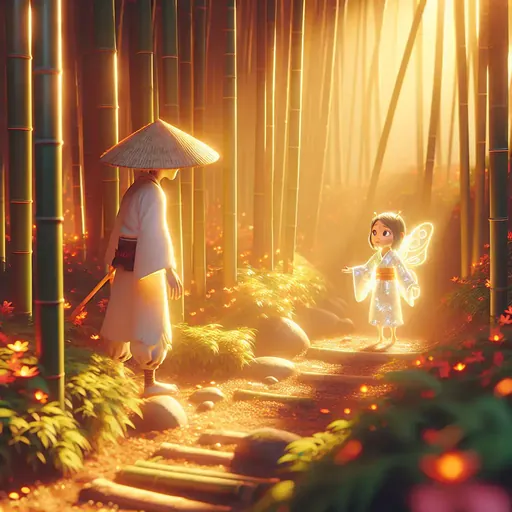
Children can read illustrated fairy tales for free on Pyxino, many of them read aloud. Project Gutenberg has the Grimm and Andersen texts.
Questions
What is the difference between a fairy tale, a folktale and a fable?
A fairy tale is a kind of folktale, full of magic and wonder. A folktale is any traditional story told aloud, with magic or without. A fable is very short, uses talking animals and usually states one lesson at the end.
Are fairy tales true?
No. Fairy tales are made-up stories full of magic. Some may hold echoes of old customs or real places, but they were told to entertain and to teach, not as history.
Who wrote the first fairy tales?
Nobody knows: fairy tales were told aloud for centuries. In Europe, Giovanni Francesco Straparola and Giambattista Basile were among the first to write them down, in the 1500s and 1600s, before Charles Perrault and the Brothers Grimm.
Why are they called fairy tales if many have no fairies?
The name comes from Madame d’Aulnoy, who used “conte de fées”, or fairy tale, for her collection in 1697. Many fairy tales have no fairy at all: magic and talking animals are more common in them than fairies.
Why do fairy tales start with “once upon a time”?
The phrase tells listeners that the story happens in a far-off, timeless world where magic is possible, and it signals that it is time to settle in and listen.
More guides
- What is a fable?A fable is a short story, usually with animals that talk and act like people, that teaches a moral lesson.
- What is a folktale?A folktale is a traditional story that people told aloud and passed down from generation to generation, so it has no single author and many versions.
- What is the moral of a story?The moral of a story is the lesson it teaches about how to live, such as “slow and steady wins the race”.
- What is a myth?A myth is a traditional story, often sacred, that explains how the world began, why nature behaves as it does or where a people’s customs come from.


More stories:Classic talesMagic


