Guide · 9 min read
What is a myth?
A myth is a traditional story, often sacred, that explains how the world began, why nature behaves as it does or where a people’s customs come from. Its main characters are usually gods and other beings beyond the human. In everyday speech “myth” can mean a false belief, but in the study of stories the word says nothing about truth.
 By Pyxino ·
On this page
Five signs of a myth
A myth has five signs: it explains something big, gods or spirits take part, it happens before our time, a whole people owns it, and it matters to those who tell it. Merriam-Webster defines a myth as “a usually traditional story of ostensibly historical events” that helps explain a people’s worldview, a belief or a natural event.
- It explains something big.Why the seasons turn, where fire came from, how the first people were made.
- Gods and spirits take part.The main characters are gods, spirits or first ancestors, not ordinary neighbours.
- It happens before our time.It is set at the beginning of things or in another world, long before history.
- A whole people owns it.Nobody signed it. It was told aloud for generations before anyone wrote it down.
- It matters to those who tell it.It is tied to belief and ritual, and its tellers hold it to be true about the deep past.
A myth is not a lie. Many of these stories are still sacred to the people who tell them.
A myth in one minute: Persephone and the seasons
The Greek myth of Persephone explains why the earth goes bare for part of every year.
Persephone, daughter of Demeter, the goddess of the harvest, is picking flowers when the earth opens. Hades, king of the world below, carries her away to be his queen. Demeter searches for nine days without eating. When she learns the truth, she turns away from the world in her grief, and nothing will grow.
Zeus sends Hermes to bring Persephone home. But Hades gives her a pomegranate seed to eat, and that one seed ties her to his kingdom. So a bargain is struck: she will spend a third of every year below and two thirds with her mother. When she goes down, the earth lies bare. When she comes back, the world flowers again.
This telling follows the Homeric Hymn to Demeter. In Ovid’s later version she stays below for half the year.
What are some famous myths from around the world?
Famous myths from around the world include Pangu in China, Amaterasu in Japan, Ra in Egypt, Thor in Norse tradition and Māui among the Māori.
| Myth | What it explains | From |
|---|---|---|
| Pangu and the cosmic egg | How sky and earth came apart, and how a giant’s body became the world | China: recorded, it is thought, by Xu Zheng in the 3rd century |
| Amaterasu and the cave | How sunlight came back: the sun goddess hides, and the gods’ laughter draws her out | Japan: Kojiki (about 712) |
| Ra and the boat of the sun | Why the sun sets and rises: each night the sun god sails through the underworld and returns at dawn | Ancient Egypt |
| Thor’s chariot | Why thunder rumbles: it is the noise of his chariot | Norse: Scandinavia and Iceland |
| Māui and the sun | Why days are long enough: Māui snares the sun and makes it travel slowly | Māori: New Zealand |
| The people of maize | How people were made: mud and wood fail, maize succeeds | K’iche’ Maya: Guatemala, in the Popol Vuh |
| Raven and the box of daylight | How light reached the world: the trickster Raven frees the sun from a box | Haida and Tlingit: Pacific coast of North America |
What are some short Greek myths for children?
Good short Greek myths for children include Pandora’s jar, Daedalus and Icarus, King Midas and Arachne. Each takes only minutes to tell.
| Myth | The story in a line | Told by | Ask a child |
|---|---|---|---|
| Pandora’s jar | Pandora opens a jar (the “box” came from a 16th-century translation) and troubles fly out. Only Hope stays inside. | Hesiod | Why do you think Hope stayed? |
| Daedalus and Icarus | A father makes wings of feathers and wax. His son flies too high, the sun melts the wax, and he falls into the sea. | Ovid | Why didn’t Icarus listen? |
| King Midas | Everything he touches turns to gold, even his dinner, until he washes the gift away in a river. | Ovid | What would you have wished for? |
| Arachne | A proud weaver challenges the goddess Athena and ends up as a spider, weaving for ever. | Ovid | Is it wrong to be proud of what you do well? |
What are the main types of myths?
The main types of myths, according to World History Encyclopedia, are etiological, historical and psychological; schools often add creation myths and hero myths.
| Type | The question it answers | Example |
|---|---|---|
| Etiological | Why is this thing the way it is? | Persephone; Thor’s thunder |
| Historical | What did that great event really mean? | The Iliad and the Odyssey |
| Psychological | What must a person face in the unknown? | The Epic of Gilgamesh |
| Creation | How did the world and its people begin? | Pangu; the people of maize |
| Hero | What can one bold person do for everyone? | Māui and the sun |
What is the difference between a myth, a legend and a folktale?
A myth is a sacred story about gods in the remote past, a legend is told as true about human heroes in a more recent past, and a folktale is told as fiction and can happen anywhere.
| Kind of story | What it is | Who is in it | Example |
|---|---|---|---|
| Myth | A sacred story of the deep past, told as true, that explains the world | Gods, spirits, first ancestors | Persephone |
| Legend | A story from human history, told as if it might be true | Heroes, kings, outlaws | Robin Hood |
| Folktale | A traditional story told as fiction | People, animals, tricksters | Anansi stories |
The folklorist William Bascom drew this line in 1965: myths, he wrote, are “considered to be truthful accounts of what happened in the remote past”.
Where do myths come from, and why do people tell them?
Myths come from stories people told aloud for generations, to explain what they saw and to hold a community together. The word comes from the Ancient Greek mythos, “speech” or “story”. As Joshua J. Mark writes in World History Encyclopedia, “myths comfort by giving a sense of order and meaning to what can sometimes seem a chaotic world.”
Myths were written down late, often by someone saving what many had told: Hesiod in Greece in the 8th or 7th century BC, the Roman poet Ovid in the year 8 AD, Japan’s Kojiki about 712, Snorri Sturluson in Iceland around 1220, and the Popol Vuh of the K’iche’ Maya, in a manuscript from about 1701.
Similar patterns appear everywhere, which led Joseph Campbell to ask: “Why is mythology everywhere the same, beneath its varieties of costume?” The everyday meaning, “a false belief”, grew out of people calling other cultures’ sacred stories wrong, which is why some scholars avoid the word for stories of a living faith.
How can you use myths with children and in class?
To use myths with children, start from a question they already ask, such as why it thunders, and always say whose story it is.
- Compare two peoples. Amaterasu and Māui are both stories about the sun. What does each one care about?
- Say whose story it is. Try “the Māori tell” rather than “people used to believe”. Many of these stories are alive today.
- Choose the retelling. Old versions can be violent, and Storyboard That notes that myths usually lack a happy ending. For younger children pick a gentle retelling and read it first.
England’s national curriculum names myths and legends for Years 3 to 6, and the US Common Core asks Grade 3 to recount “fables, folktales, and myths from diverse cultures”.
How do you write your own myth?
To write your own myth, pick a question about the world and invent the old story that answers it.
- Pick a question. Why does the moon change shape? Why is the sea salty? Why do cats purr?
- Imagine the world before. Set your story at the beginning of things, when the moon was still round all month.
- Create your gods. A sky spirit, a river giant, a clever first animal: give each one a wish and a weakness.
- Make something go wrong. A quarrel, a theft, a broken promise. That is what causes the change.
- End with today. Close with “and that is why, to this day...”. Your last line answers your first question.
My myth
- The question my myth answers:
- The world before the change:
- My god or powerful being, and what they want:
- What goes wrong:
- What changes for ever:
- And that is why, to this day...
pyxino.com
Stories to read next
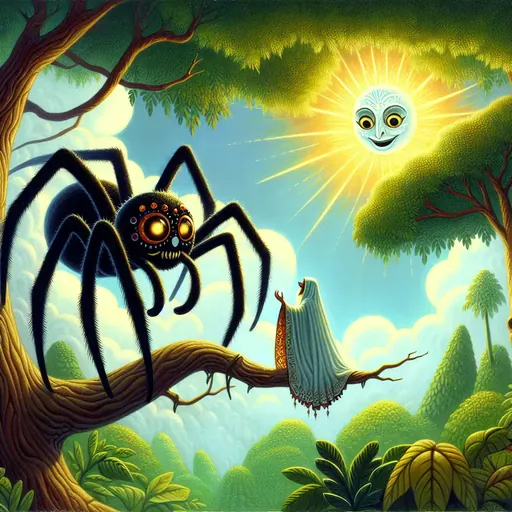
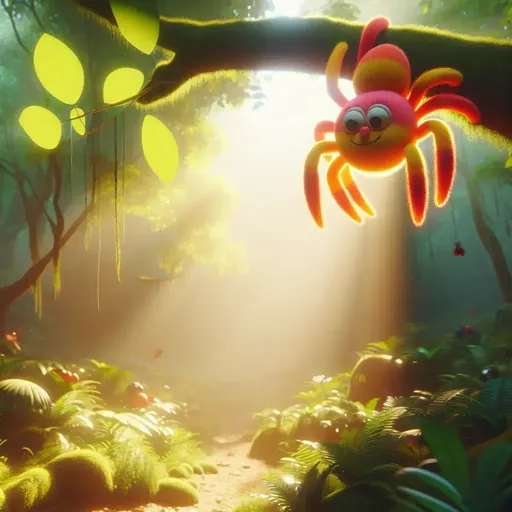
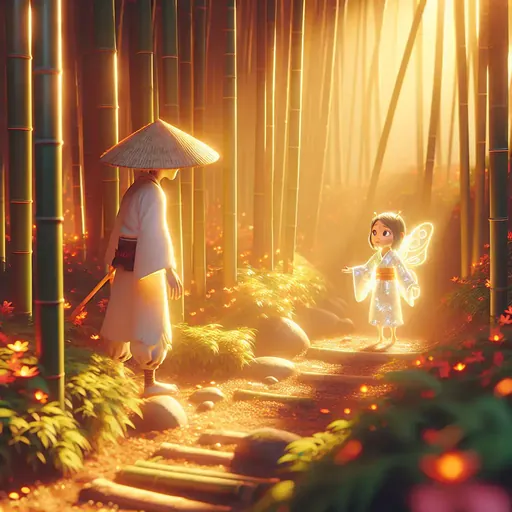
Three old stories close to myth, free and illustrated: Anansi of Ghana, The Tale of the Bamboo Cutter, whose ending explains the smoke of Mount Fuji, and Journey to the West, full of gods and spirits.


Questions
What is the difference between a myth and a legend?
A myth is about gods or first beings and explains how things came to be, in a time before history. A legend is about people, in a time and place we recognise, and may have some history behind it. Persephone is a myth. Robin Hood is a legend.
Are myths true?
Not in the way a news report is true. To the people who tell them, myths hold truths about how the world is ordered and how to live in it. Scholars use the word without judging whether the events happened.
What are the three types of myths?
One common scheme names three types of myths. Etiological myths explain why something is as it is, historical myths lift a past event into something greater, and psychological myths follow a journey into the unknown.
What is an example of a myth?
The Greek myth of Persephone explains why the earth stops growing for part of each year. The Maya Popol Vuh tells how the first people were made from maize.
Why are myths important?
Myths are important because they show what a people believed and valued. They give order and meaning to the world, explain nature and customs, and hold a community together, and many writers still draw on them.
What is the difference between a myth and mythology?
A myth is one story. Mythology is a culture’s whole set of myths, and also the study of them: World History Encyclopedia defines it as “the study and interpretation” of such sacred tales.
More guides
- What is a legend?A legend is a traditional story about people and places in human history, told as if it really happened and often mixing real events with invention.
- What is a folktale?A folktale is a traditional story that people told aloud and passed down from generation to generation, so it has no single author and many versions.
- What is a fairy tale?A fairy tale is a short story of magic and wonder, in which ordinary heroes meet witches, fairies, giants or talking animals and good usually wins.
- What is a fable?A fable is a short story, usually with animals that talk and act like people, that teaches a moral lesson.


More stories:Classic talesMagic


