Guide · 9 min read
What is a legend?
A legend is a traditional story about people and places in human history, told as if it really happened and often mixing real events with invention. King Arthur, Robin Hood and William Tell are famous legends. Unlike a myth, a legend usually has human heroes and a setting you can find on a map.
 By Pyxino ·

On this page
Five signs of a legend
A legend has five signs: it names a real place, its hero is human, it is set in history, something grows larger than life, and people half believe it. The folklorist William Bascom wrote in 1965 that legends are “regarded as true by the narrator and his audience”.
- It names a real place.A forest, a town, a mountain: somewhere you can find on a map and often still visit.
- Its hero is human.An outlaw, a king, a clever apprentice: a person, not a god, even if the deeds are huge.
- It is set in history.It claims a time people recognise: the year 1284, or the reign of a king.
- Something grows larger than life.A perfect shot, a sword in a stone, a dragon: wonders are added to a human story.
- People half believe it.It is told as true, doubted by some and never quite settled, so each teller adds a little.
A legend in one minute: the Wawel Dragon
The Wawel Dragon of Kraków, Poland, is a classic example of a legend, because it ties a wonder to a real hill and river.
The Wawel Dragon
Long ago, the story goes, a dragon lived in a cave under Wawel Hill in Kraków, Poland, and the city had to keep it fed. Then a cobbler’s apprentice called Skuba had an idea. He stuffed a lamb with sulphur and left it outside the cave. The dragon swallowed it, and its insides began to burn. It was so thirsty that it rushed to the River Vistula and drank and drank until it burst. The city was free.
Now look at what is real. The hill and the river are there, and you can visit the cave, where a metal dragon breathes fire every few minutes. The story has changed too: the oldest telling, from the 13th century, has no cobbler, and one first appears in a chronicle of 1597.
What are some famous legends, and are they real?
Famous legends include King Arthur, Robin Hood, William Tell, Mulan and Sundiata, and while some of their heroes really lived, for others nobody can say.
| Legend | The story | From | What is real? |
|---|---|---|---|
| King Arthur | A king with a magic sword, a wizard and knights at a Round Table | Britain | Most historians doubt he existed. |
| Robin Hood | An outlaw of the greenwood who takes the side of the poor | England | Unproved, and still debated. |
| William Tell | An archer forced to shoot an apple off his son’s head | Switzerland | No evidence from his own time. First recorded in the 1470s. |
| Hua Mulan | A daughter takes her father’s place in the army | China | Unclear. The story comes from a folk song. |
| Sundiata | A prince who cannot walk as a child grows up to found an empire | Mali | He was real: he founded the Mali Empire in the 13th century. |
| The Pied Piper of Hamelin | A piper rids a town of rats and, when he is not paid, leads its children away | Germany | A town record of 1384 reportedly says “It is 100 years since our children left.” Nobody knows why. |
| El Dorado | A golden ruler who became a lost city of gold | South America | The Muisca of Colombia did offer gold to a sacred lake. No golden city was ever found. |
| Johnny Appleseed | A kindly wanderer scatters apple seeds across America | United States | John Chapman (1774–1845) was real, but he ran fenced nurseries and owned land. |
| Kintarō | A boy of huge strength grows up on a mountain among animals | Japan | Said to be based on Sakata Kintoki, a warrior of the Heian period. |
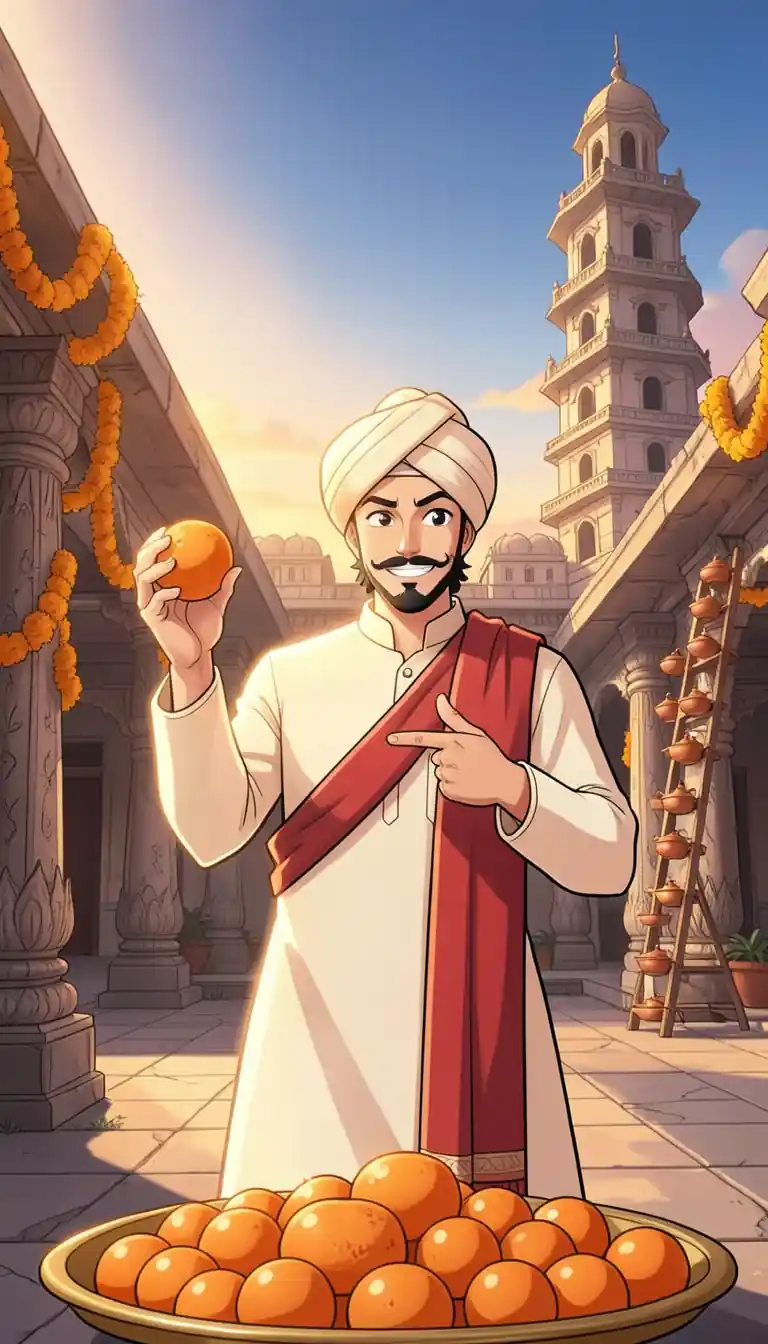
| Tenali Rama | A witty poet outsmarts everyone at the king’s court | India | A real Telugu poet at the court of Krishnadevaraya. The funny tales are folklore. |
What are the types of legends?
Legends are often sorted into historical, religious, local, supernatural and urban legends, though classroom guides differ on the names.
| Type | What it is about | Example |
|---|---|---|
| Historical | A real or possible person from the past | Robin Hood; Sundiata |
| Religious | Saints and miracles: the first “legends” were saints’ lives | The Golden Legend of Jacobus de Voragine |
| Local | One town, hill or valley | The Wawel Dragon; Sleepy Hollow in the Hudson River Valley |
| Supernatural | Monsters people claim to have seen | The Loch Ness Monster |
| Urban | A modern story passed on as true | Alligators in the sewers of New York |
How does a legend grow?
A legend grows as tellers add details over centuries, and with King Arthur we can watch each piece arrive.
| When | Who | What it added |
|---|---|---|
| 9th century | Historia Brittonum | The first datable mention: Arthur and twelve battles |
| About 1138 | Geoffrey of Monmouth | A full life story, with Uther Pendragon, Merlin and Guinevere |
| About 1170 to 1190 | Chrétien de Troyes | Lancelot and the Holy Grail |
| 13th century | Robert de Boron | The sword in the stone |
| 1485 | Thomas Malory | Le Morte d’Arthur, the source of most later versions |
Robin Hood grew the same way. The poem Piers Plowman mentions “rhymes of Robin Hood” in the 1370s. The idea of robbing the rich to give to the poor first appears in John Stow’s Annales of England in 1592.
What is the difference between a legend, a myth and a folktale?
A legend is told as true about human heroes in a recognisable past, a myth is a sacred story about gods in a time before history, and a folktale is told as fiction and can happen anywhere.
| Kind of story | What it is | Who is in it | Example |
|---|---|---|---|
| Legend | A story from human history, told as if it might be true | Heroes, kings, outlaws | Robin Hood |
| Myth | A sacred story of the deep past that explains the world | Gods, spirits, first ancestors | Persephone |
| Folktale | A traditional story told as fiction, in any time or place | People, animals, tricksters | Anansi stories |
| Tall tale | Impossible feats, exaggerated for laughs | Frontier heroes | Paul Bunyan |
| Fairy tale | A story of magic and wonder, “once upon a time” | Princesses, witches, fairies | Cinderella |
| Fable | A very short story that teaches one lesson | Talking animals | The Tortoise and the Hare |
A quick test. Can you point to it on a map, and could its hero have lived? Probably a legend. Do gods shape the world? A myth.
Where does the word “legend” come from?
The word “legend” comes from the Medieval Latin legenda, “things to be read”. At first it meant the lives of saints, read aloud in church. English took it from Old French around 1340, and in time it came to mean any story set in history with wonders in it. The Brothers Grimm called the legend a “folktale historically grounded”.
Most legends lived in the voice long before the page: griots in West Africa passed down Sundiata’s story, ballad singers carried Robin Hood, and a folk song carried Mulan. That is why no two versions quite agree.
How can you use legends with children and in class?
Legends work well in class because children can test them, sorting the details into two columns: “could be checked” and “grew in the telling”.
- Look close to home. Many towns have a story about a bridge, a hill or an old house. Ask a grandparent or the local library.
- Hear a legend change. Whisper a short legend around the class. What grew? What vanished? That is what centuries do.
- Choose the version. Some legends are dark: the Pied Piper loses a town’s children. Read first and pick a retelling that suits your child.
England’s national curriculum names “myths and legends” for Years 3 and 4, and “myths, legends and traditional stories” for Years 5 and 6.
How do you write your own legend?
To write your own legend, start with a real place near you, choose a human hero, add one wonder and tell it as if it were true.
- Start with a real place. A bridge, a hill, an old tree or a strange rock near your home.
- Ask a question about it. Why is the rock split in two? Why does the street have that name?
- Choose a human hero. Someone who could have lived there long ago: a baker, a shepherd, a brave girl.
- Add one wonder. Just one: a talking raven, a giant, an impossible shot. Keep the rest believable.
- Tell it as if it were true. Begin with “They say that long ago...” and end at the real place: “and you can still see the mark today”.
My legend
- The real place:
- My question about it:
- My hero, and when they lived:
- The one wonder:
- What my hero does:
- What you can still see today:
pyxino.com
Where can children read legends for free?
Children can read illustrated retellings of these legends for free on Pyxino, many of them read aloud.
Start with these:
Questions
What is the difference between a legend and a myth?
A legend has human heroes and is set in history, in places we know, and it may have some truth behind it. A myth is about gods or first beings in a time before history, and explains how things came to be. Robin Hood is a legend. Persephone is a myth.
Are legends true?
Sometimes partly. Many legends begin with a real person, place or event and then grow with each telling. Johnny Appleseed was a real man. Most historians doubt that King Arthur existed. A legend is a story that can’t be fully proved or fully dismissed.
What is an urban legend?
An urban legend is a modern story, usually passed on as true, that is odd, funny or frightening and has not been checked, such as the claim that alligators live in the sewers of New York. The scholar Jan Harold Brunvand made the term popular with his books from 1981.
What does it mean to call someone a legend?
Calling someone a legend means they are famous for extraordinary achievements, like a great athlete or musician. It is the word’s second main sense, beside the kind of traditional story this guide explains.
What does “legend” mean on a map?
On a map, the legend is the key that explains the symbols and colours. The word comes from the Latin legenda, “things to be read”, which is where the story meaning comes from too.
More guides
- What is a myth?A myth is a traditional story, often sacred, that explains how the world began, why nature behaves as it does or where a people’s customs come from.
- What is a folktale?A folktale is a traditional story that people told aloud and passed down from generation to generation, so it has no single author and many versions.
- What is a fairy tale?A fairy tale is a short story of magic and wonder, in which ordinary heroes meet witches, fairies, giants or talking animals and good usually wins.
- What is a fable?A fable is a short story, usually with animals that talk and act like people, that teaches a moral lesson.


More stories:AdventureClassic tales


